

Light in Circulation | Fountain Reflections – Edition in Red
Price range: $19.00 through $899.00
Fountain Reflections, Red edition glows with life, love, and movement, capturing the intimate interplay of water, nature, and human presence at Duke Gardens in a palette of deep, passionate red.
This is a Artwork in Red of Robert Mihaly?s original oil painting Fountain Reflections, 2025
The broad path from the parking lot into the Sarah P. Duke Gardens opens onto the lively fountain, where long-necked cranes stretch, splash, and dance in the vibrant light. Bathed in warm red tones, the fountain?s waters shimmer like molten rubies, each ripple echoing the rhythm of life itself. Donated in 1897 by Ann Roney to Trinity College, an earlier iteration of Duke University, the fountain had fallen into quiet disrepair over the decades but was lovingly restored and relocated to the Gardens in 2011, reclaiming its place as a center of beauty and reflection.
Cranes, ancient symbols of happiness and eternal youth, move with elegance through the spouting water, their forms mirrored in the lake-like reflections, a visual dance of vitality and grace. Children, caught in playful contemplation, toss coins into the fountain, while the surrounding flora and tall magnolias cast flickering, ruby-hued shadows across the water. In the distance, a small couple strolls arm in arm, pausing to admire the fountain?s glowing surface. Their quiet presence imbues the scene with human intimacy, a soft counterpoint to the kinetic energy of the cranes and water.
Fountains have always symbolized the flow of time and life itself: every droplet a fleeting moment, every splash a tiny celebration. Mihaly?s painting elevates this natural and human choreography, blending motion, reflection, and sentiment into a harmonious tableau. The red palette intensifies the drama and passion of the moment, emphasizing warmth, vitality, and the subtle romance of a shared glance under sunlit trees.

3¼″ Vintage Copper Wood Frame
Warm, burnished copper tones and a subtly distressed profile give this frame a rich, time-worn elegance. Its depth and sculpted edge create a strong visual boundary, ideal for paintings with earth tones, dramatic light, or historical resonance.

3″ Gold Plein Air Frame
A classic plein-air profile finished in luminous gold, this frame brings warmth and refinement without overpowering the artwork. Its softly stepped contours echo traditional museum framing, making it a natural match for impressionistic and color-rich paintings.

2⅞″ Driftwood Chic White Frame
This frame’s weathered white finish evokes sun-bleached wood and coastal calm. Light in tone but substantial in presence, it pairs beautifully with airy compositions, soft palettes, and works that benefit from a relaxed, contemporary feel.

2 9⁄16″ Plein Air Espresso Frame
Deep espresso brown with a matte, hand-rubbed appearance gives this frame a grounded, understated sophistication. Its plein-air profile complements both modern and traditional works, especially those with warm shadows or moody atmospheres.

Concerto Black with Gold Frame
A striking contrast of satin black and inner gold detailing, this frame adds drama and definition while subtly pulling light toward the artwork. It’s an excellent choice for bold compositions, jewel tones, or paintings that benefit from a touch of formal elegance.

Gold Floating Frame
Designed to create the illusion that the artwork is suspended within the frame, this gold floating frame offers clean lines with a refined metallic glow. It’s ideal for contemporary paintings, allowing the artwork to breathe while adding a quiet sense of luxury.
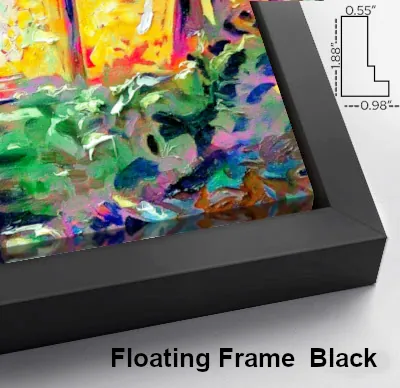
Black Floating Frame
Minimal and architectural, the black floating frame provides crisp separation between artwork and wall. Its matte finish and shadow-gap design enhance contrast, making colors feel richer and compositions more focused.

Silver Floating Frame
Cool and modern, the silver floating frame introduces a soft metallic edge without visual heaviness. The floating design keeps the presentation light and contemporary, well suited to works with cool palettes or subtle tonal shifts.
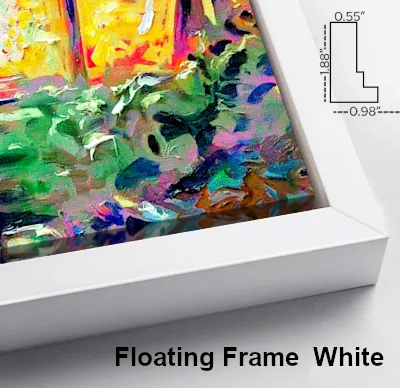
White Floating Frame
Clean, bright, and quietly modern, this white floating frame offers a gallery-style presentation that emphasizes light and space. The shadow gap adds depth while maintaining a fresh, minimalist aesthetic that works beautifully in contemporary interiors.


Mihaly’s canvas reproductions are produced using archival-grade materials and professional printing methods designed to preserve color, detail, and surface quality over time. Each piece is printed on thick, pH-neutral, acid-free canvas chosen for its durability and bright white surface, allowing color to remain vibrant, accurate, and true to the artist’s original vision without yellowing or degradation.
The canvases are stretched on solid wood stretcher bars, measuring 1.5 inches deep, with rounded and beveled edges that minimize contact with the canvas surface. This construction helps prevent warping or bowing over time while giving the artwork a substantial, gallery-ready presence.
Printing is done using color-calibrated giclée inkjet technology with eco-solvent inks, ensuring consistency, tonal accuracy, and long-term resistance to fading. Under proper conditions, these archival inks are rated to maintain their color integrity for generations.
Larger canvas sizes—12 × 16, 18 × 24, 24 × 32, and 30 × 40—arrive professionally finished with a black backboard and heavy-duty hanging wire installed. Smaller sizes, including 6 × 8 and 9 × 12, are fitted with sawtooth hangers for easy installation. Lightweight yet substantial, canvas reproductions are designed to hang effortlessly while offering lasting visual impact.
Together, these materials and methods result in museum-quality reproductions that balance longevity, visual depth, and craftsmanship—making them well-suited for both private collections and thoughtfully designed spaces.

For collectors seeking something rarer, deeper, and more personal, select canvas reproductions are offered as hand-finished works completed within the artist’s studio. These pieces exist in the space between reproduction and original painting — each one individually textured, finished, and documented.
After printing, hand-applied texture mediums are carefully added to the canvas to echo the rhythm, movement, and tactile presence of the original oil painting. The process follows artist-defined methods and materials, with subtle variations in texture ensuring that no two pieces are exactly alike.
Each hand-textured canvas is individually numbered to reflect its place within the ongoing studio process, rather than as part of a fixed edition. The textured surface is then sealed with a UV-resistant varnish, adding depth and tonal richness while protecting the artwork over time. Every piece is signed and accompanied by a Certificate of Authenticity, affirming its status as an artist-directed, studio-finished work.

Mihaly’s paper prints are produced on premium fine art papers selected for their surface quality, color fidelity, and long-term stability. Each print is made on thick, archival-grade, acid-free paper designed to preserve detail and tonal richness while ensuring a long print life.
Printing is done using professional, color-calibrated Canon giclée printers with aqueous pigment inks. This process delivers precise color accuracy, deep blacks, and subtle tonal transitions, with archival ratings that support resistance to fading for generations under proper conditions.
Select prints are produced on cold press, textured matte fine art paper made from 100% cotton rag. This heavyweight paper offers a softly tactile surface that adds depth and dimension to the image, enhancing brushwork, atmosphere, and light without introducing gloss or glare. Its neutral white tone supports accurate color reproduction, while the matte finish allows the artwork to be viewed comfortably in a wide range of lighting environments.
Together, these materials and methods result in paper prints of exceptional quality and longevity, offering a refined, archival alternative for collectors who appreciate subtle texture, clarity, and classic presentation.
Select works are accompanied by a Certificate of Authenticity verifying their origin, materials, and studio process. Each certificate serves as an official record of the artwork, affirming its status as an authentic work produced under the artist’s direction.
Certificates are included with all canvas reproductions and hand-textured works, and with select large-format paper prints. Each certificate identifies the artwork by title, medium, and production details, and documents whether the piece was studio-finished or hand-textured. When applicable, the certificate also records the work’s individual studio number or edition information.
Every Certificate of Authenticity is signed and approved by the artist and printed on archival paper. Subtle design elements may reference the artist’s visual language or studio identity, creating a formal connection between the certificate and the artwork itself.
Together with the artist’s signature on the artwork, the certificate establishes provenance, supports long-term collectible value, and transforms ownership into a considered, enduring collector experience.
